Community development is the process of residents working together to solve problems they share and to build on what their community already has. To start, you don't need funding or a big organization. You need to listen to your neighbors, choose one real need, find partners such as your barangay and local groups, run a small project well, and measure what changed. Then do it again, a little bigger, with more people leading.
This guide walks through those steps with examples that fit barangays in Capiz and the rest of the Philippines.
What community development really means
Community development is not the same as charity. Charity gives something once. Community development helps people organize so they can keep improving their own lives after the outside helpers leave.
Three ideas sit at the center of it:
- Community-led. Residents decide the priorities. Outsiders support, they don't take over.
- Built on strengths. Every barangay has assets: skilled fishers and farmers, a chapel, a covered court, a retired teacher, active mothers' groups. Start from those, not only from what is missing.
- Sustainable. A good project keeps going because local people own it, not because a sponsor keeps paying.
In Hiligaynon, it is the spirit of bulig-bulig, helping one another, organized with a plan.
Why the barangay matters
In the Philippines, the barangay is where most community development happens. The Local Government Code of 1991 requires every local government unit, including the barangay, to have a development council that prepares a multi-sectoral development plan. It also requires that representatives of non-governmental organizations make up at least one-fourth of a fully organized council. In other words, the law expects citizens and organizations to help shape local plans.
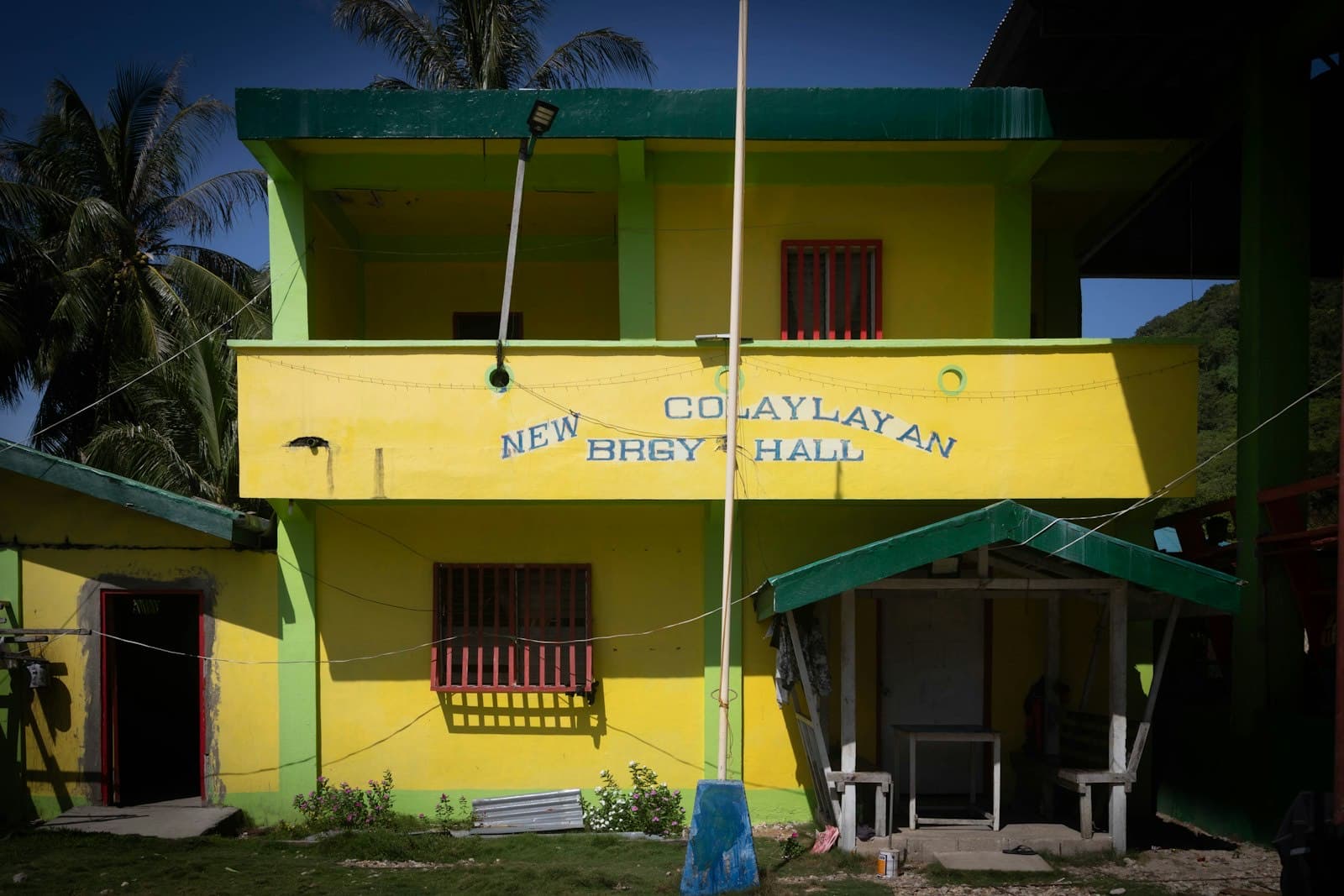
Working with your barangay council and Sangguniang Kabataan (SK) from the start makes everything easier: permits, venues, information about households, and long-term care of whatever you build.
How to start community development: 8 steps
1. Listen first
Before deciding anything, talk to people. Visit the barangay hall, attend a barangay assembly, and speak with barangay health workers, teachers, tanods, SK officials and ordinary residents. Ask simple questions: What is hardest about living here? What has been tried before? What worked?
Write down what you hear. Patterns will show up quickly.
2. Map what the community already has
List people with skills, existing groups, places you can use, and small businesses that might help. A community map drawn on manila paper with residents is a great tool. It often shows that the solution is already partly there.
3. Choose one problem
Pick a need that is real, specific and small enough to act on. "Poverty" is too big. "Out-of-school youth in Purok 3 have no way to learn a trade" is something you can work on. Good first projects usually take one to three months.
4. Find partners
Ask who else cares about this problem. That might be the barangay council, the SK, a school, a parish, a local business, a government office or a civic organization. Partners bring people, venues, knowledge and sometimes funding. If you need a group to join, our guide to NGOs and youth organizations in the Philippines explains your options.
5. Plan simply and write it down
A one- or two-page plan is enough at first. Cover the problem, your goal, the activities, who does what, the timeline, the budget and how you will know it worked. Our community project proposal sample gives you a ready format. If you need sponsors, use our sponsorship letter sample.
6. Act, and involve residents in the work
Let residents lead parts of the project, not just attend it. A livelihood training is stronger when a local trainer teaches. A clean-up lasts longer when the purok sets its own schedule afterward.
7. Measure what changed
Count simple things before and after: number of participants, kilos of waste collected, trees still alive after six months, students who passed, families who started selling. Ask participants what changed for them. Honest numbers help you improve and help partners trust you.
8. Hand over and grow
Plan from day one who will continue the work. Train local leaders, leave records and tools behind, and agree on the next step with the barangay. Then choose the next problem, using what you learned.
Community development project ideas for Capiz
- Disaster preparedness: family preparedness talks, go-bag drives and evacuation drills before typhoon season. See our typhoon preparedness checklist.
- Coastal care: mangrove planting with the barangay and local fisherfolk, and regular shoreline clean-ups.
- Livelihood: skills training for out-of-school youth, or packaging and online selling workshops for small food producers.
- Education: reading programs, tutoring and school supply drives with public schools.
- Health: mental health talks, blood donation drives and medical missions with local health offices.
- Youth leadership: anti-bullying sessions, public speaking workshops and youth councils.
Common mistakes to avoid
- Deciding for the community. If residents weren't asked, they won't own it.
- Doing too much at once. One project done well beats five half-finished ones.
- Planning only for the photo. Think about what happens the week after the event.
- Skipping the barangay. Even a great idea stalls without local officials' support.
- Not keeping records. Attendance sheets, receipts and photos are your proof of work for the next partner.
How JCI approaches community development
JCI chapters around the world use a method called the Active Citizen Framework. It starts with analyzing a community's needs, then moves to planning sustainable solutions, taking action, and measuring results. It works as a checklist for any group, and it is one of the tools JCI members learn to use.
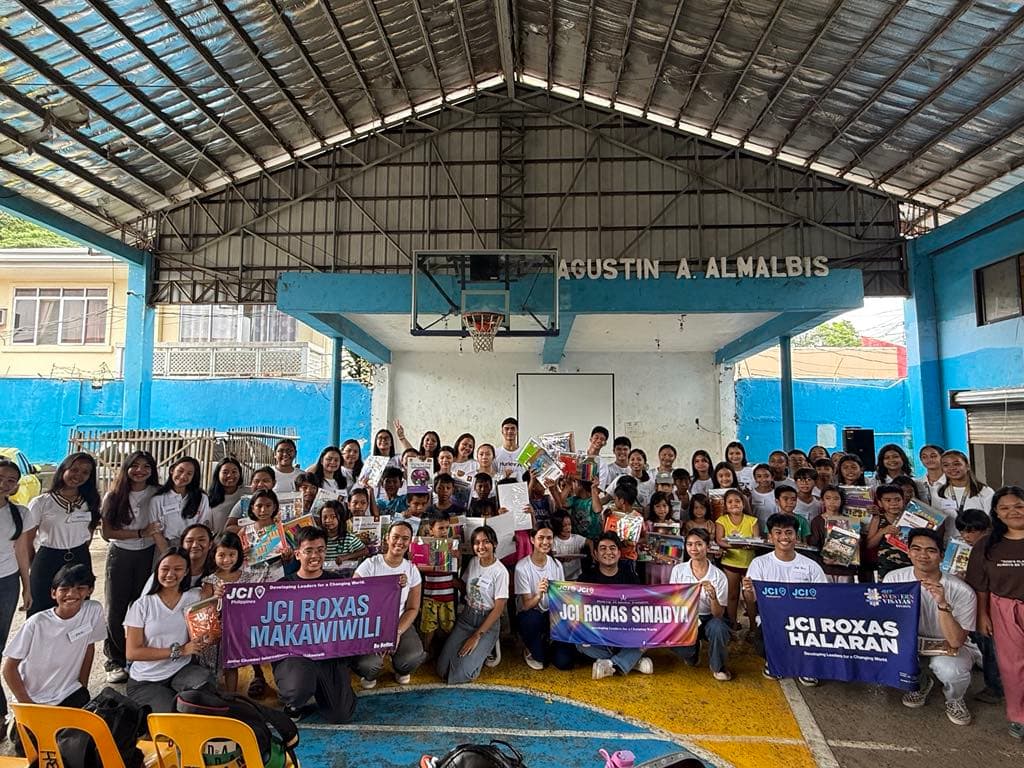
Here is how some JCI Roxas Halaran projects in Roxas City line up with the steps above:
- Hand over (step 8): on April 24, 2026, the chapter turned over Project G.I.L.L.S. (Guiding Initiatives for Litter-Less Spaces) trash traps and solid waste management systems to Brgy. Punta Cogon. The Tree Huggers Movement gave an awareness talk at the turnover.
- Build on strengths and measure (steps 2 and 7): at Coastline Cuts on June 20, 2026, six local barbers, two from the fisherfolk community and four from Roxas City's LGBT+ community, gave free haircuts at the Dumolog Covered Court with the barangay council and SK. The target was 200 cuts, and 107 people were served, an honest number the chapter can plan from.
- Keep showing up: Hot Meals on Wheels, the chapter's recurring feeding program, has returned to coastal communities such as Sitio Takilid and Brgy. San Juan in Baybay, often alongside other projects.
You can see more of our work on our projects page.
Frequently asked questions
What is the main goal of community development?
To help residents organize and act on their shared problems so that improvements last, led by the community itself rather than by outsiders.
Do I need money to start a community development project?
Not much. Many good first projects run on volunteer time, borrowed venues and donated materials. Funding helps once you have a track record.
Who should I talk to first in my barangay?
Start with the punong barangay or barangay secretary and the SK chairperson. Barangay health workers and teachers are also excellent sources of information about real needs.
How do I know if my project worked?
Set two or three simple targets before you start, measure them afterward, and ask the people involved what changed for them.
Start with one step
Community development begins with one conversation and one small, well-run project. Download a ready-made plan from our free templates, and if you're a man aged 18 to 40 and want a team to build projects with, join JCI Roxas Halaran.